Centralizing AI usage data with Fivetran’s AI connectors

The continued advancement, adoption, and usage of AI are collectively translating into meaningful, and sometimes unexpectedly heavy, enterprise spend. Teams use OpenAI, Anthropic, open-source models, AI coding tools, cloud-hosted models, and a growing ecosystem of specialized AI applications to accelerate every kind of business operation.
Fivetran has experienced this evolution firsthand. Our own AI usage has expanded from engineering to the wider business, with a continually evolving inventory of tools and models. As that adoption grew, so did the questions from our leadership team: How much are we spending on AI? How is it being used across the business? And is that investment actually improving productivity?
As the team responsible for helping answer those questions, we quickly realized the challenge wasn't simply understanding how much we were spending on AI. We needed the visibility to manage AI as a growing business investment. Our existing manual processes couldn't keep pace with growing AI adoption, so we needed a better way to bring the data together and turn it into answers the business could act on. Fortunately, we understand how to pull data from fragmented systems into one place extremely well.
[CTA_MODULE]
Manual data integration doesn’t work for AI analytics
Major AI providers offer usage and spend data, but don’t necessarily organize it the way a company budgets its operations. For example, AI providers often provide user-level information, while a finance team needs to assign spend to cost centers to budget.
At Fivetran, our finance team needed AI spend attributed to cost centers so actuals could be compared against budget. Our analysts spent considerable time manually turning usage and spend data into a usable format, relying on a hodgepodge of provider tools, numerous CSV exports, and other stop-gap processes.
The data was there. The challenge was bringing it together with the business context needed to make it useful.
Using Fivetran AI connectors to build a centralized view
We replaced manual ingestion by building a centralized view of AI usage with our standardized AI connectors for OpenAI (currently in general access) and Anthropic (currently in BETA). By enriching AI usage data with HR and employee data (Fivetran supports Workday, Oracle Fusion HCM, ADP Workforce Now, and more) across business units, we built a unified AI cost model that powers a centralized dashboard.
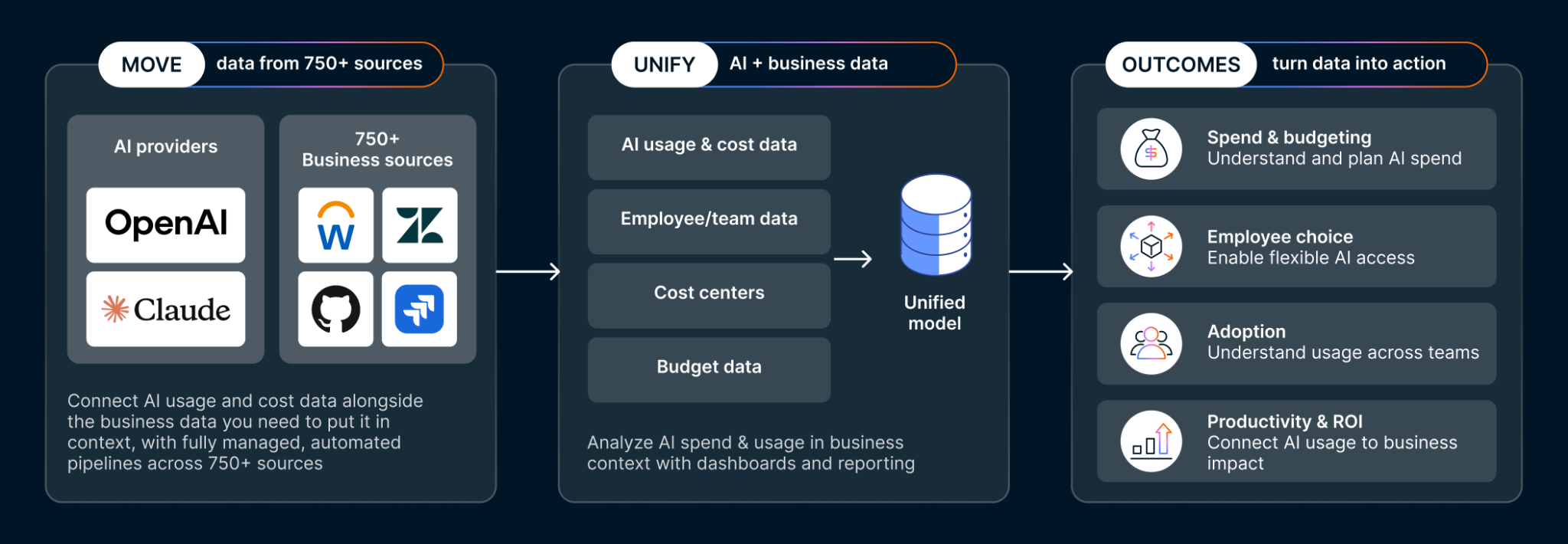
Previously, it took our corporate finance team at least a full day to manually pull reports from disparate systems, sort the data by usage type, and combine it with other enterprise data. Automatically centralizing and enriching the data not only saves that day but also lets us observe AI usage in near real time, rather than retrospectively. This will also allow us to grow and scale our AI vendor mix in the future.
We're not the only company facing these issues. As organizations expand from isolated AI experiments to companywide adoption and production AI agents, AI consumption data is becoming another critical enterprise data source. Fivetran's connectors for AI providers make it easier to centralize that data alongside the financial, organizational, engineering, and operational data required to put it into context.
This stack required some additional downstream data engineering to turn raw data into usable models. To shorten the path from raw data to insight, we've released pre-built Quickstart models for both our Anthropic and OpenAI connectors, along with an AI Reporting package that unifies both vendors' data in one place. The models cover cost and usage, user-level activity, coding productivity, and per-user summaries, so teams can move from raw AI provider data to analysis-ready metrics faster.
Answering the questions our business was asking
Centralizing AI usage and spending data allows us to track our AI spend, confidently give employees greater access to AI, and understand how AI is impacting our business operations.
What are we spending on AI, and how should we plan for it?
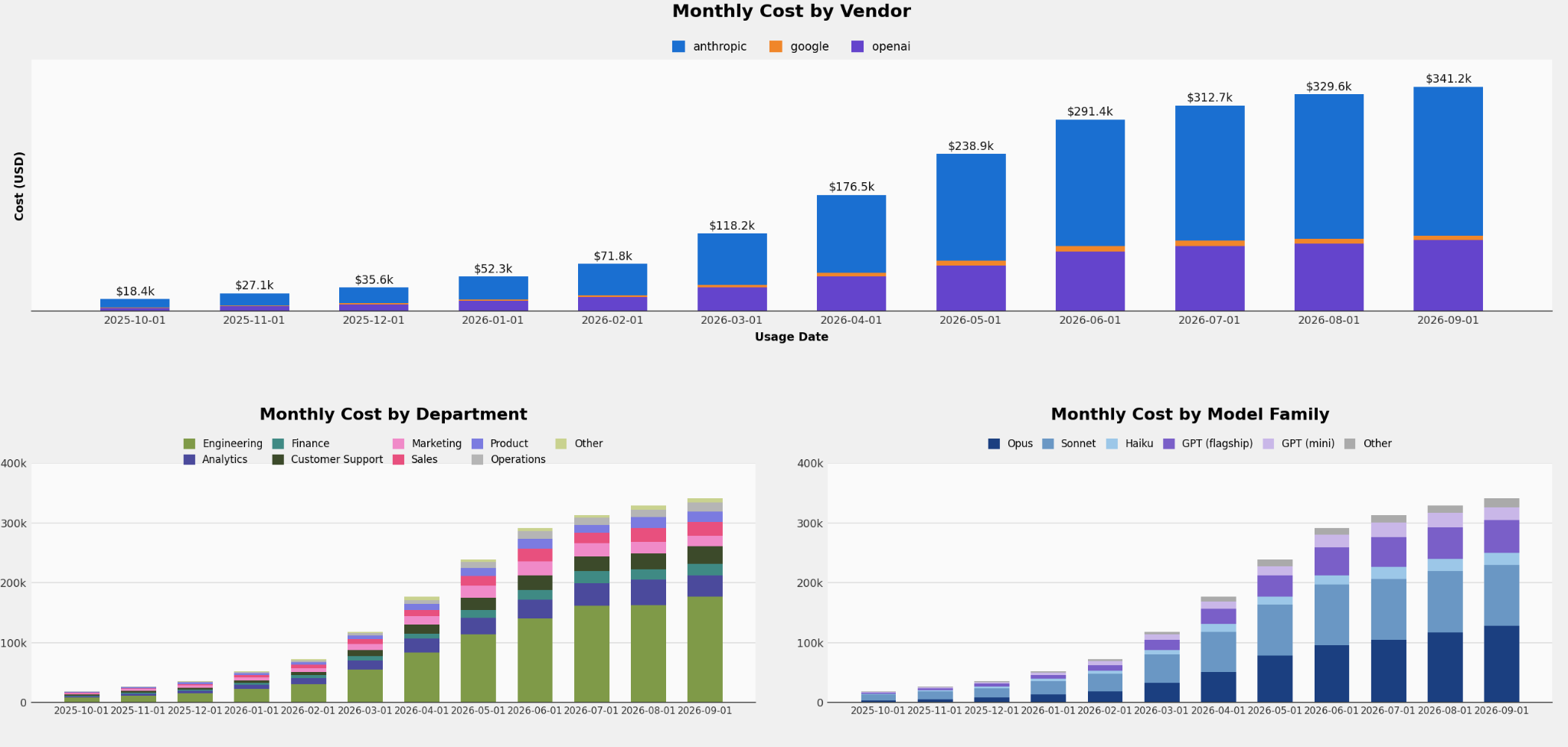
A centralized AI cost dashboard allows us to understand how much we’re spending on AI today and what that tells us about future needs. Across finance, engineering, analytics, and other departments, stakeholders can gain a common view of where AI spend is going and how it is changing. Instead of checking individual provider portals, we can analyze spend by dimensions such as vendor, team, user, model, and usage type.
AI consumption continues to evolve, so historical data doesn't make future spend completely predictable. But it gives us a much stronger foundation for understanding where consumption and needs are growing and planning how budgets should be allocated.
At Fivetran, our AI connectors were especially helpful following the merger between Fivetran and dbt Labs, allowing us to scale data integration to understand combined AI consumption without additional manual work.
How can we give employees more flexibility in using AI?
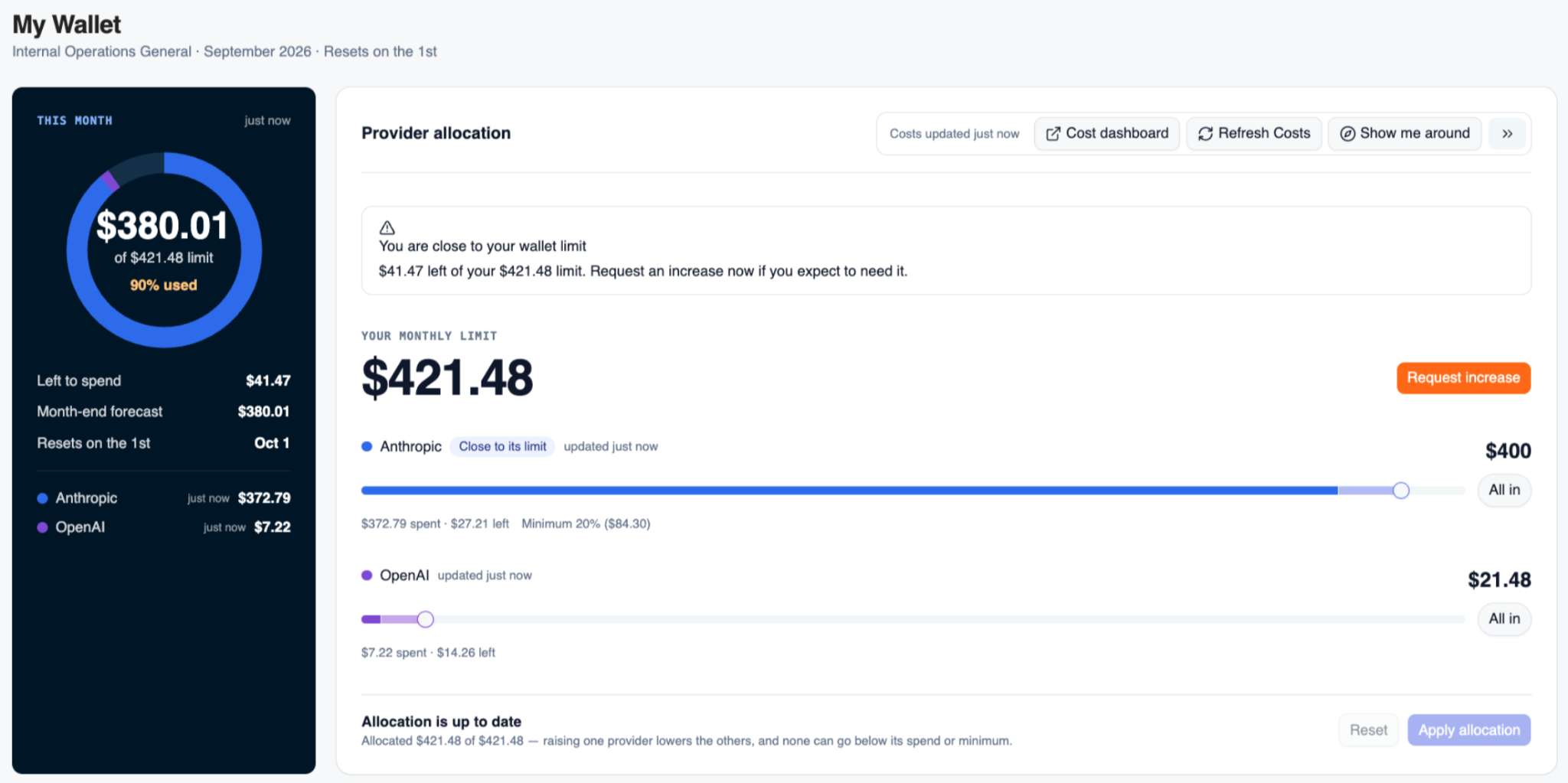
Centralized visibility removes guesswork from tool access and usage, allowing us to understand employee needs while giving teams explicit budgets and clear usage expectations. By monitoring usage and spend, we can also negotiate with AI vendors, tailoring contracts to specific consumption patterns.
Fivetran’s internal AI wallet gives employees an individual AI budget they can allocate across different tools based on their needs and preferences. Employees can see their spend and remaining budget, while administrators maintain centralized visibility into usage and spend across the organization. This gives employees greater freedom of choice without sacrificing financial oversight.
Is our AI usage translating into business impact?
AI usage is relatively easy to measure. AI value is harder. Connecting AI consumption data with operational data from systems such as GitHub, Jira, CRM, and support platforms gives us a foundation for understanding whether AI adoption and usage are actually improving business outcomes.
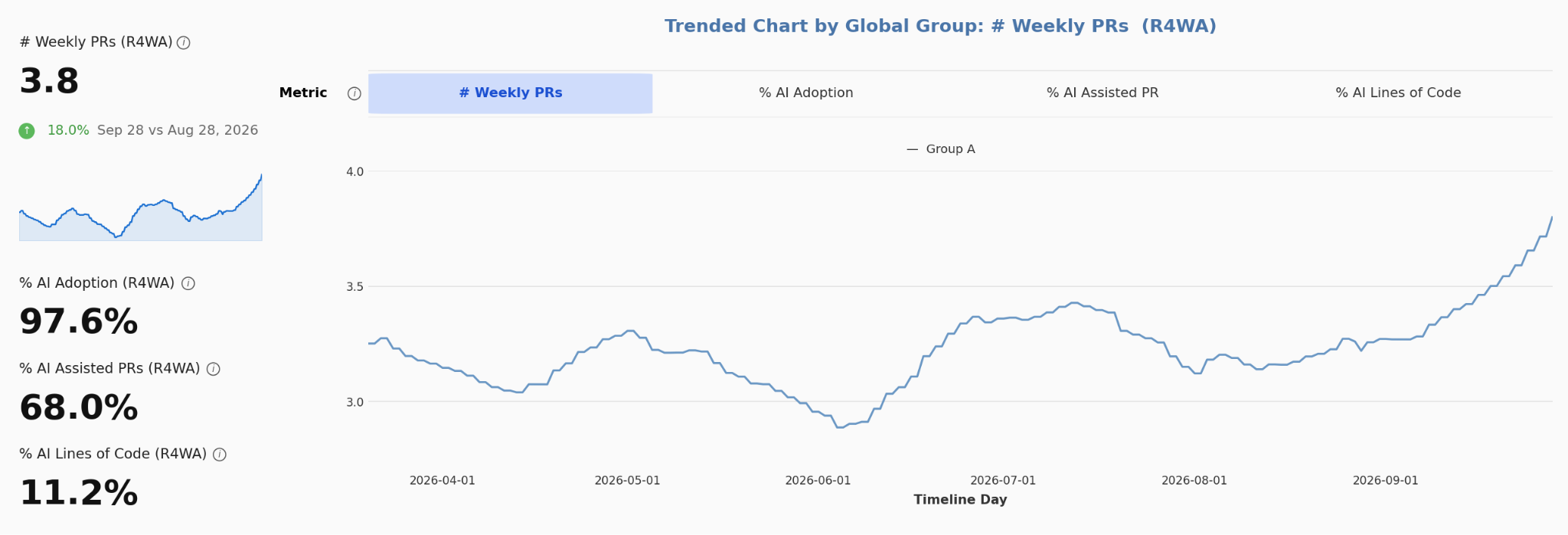
At Fivetran, we combine AI usage data with engineering activity data to identify productivity bottlenecks and identify opportunities to accelerate engineering. Our AI Enablement team has operationalized AI access and connectors across most of the company, developing ROI models that connect AI usage to the outcomes that matter for each use case.
Manage AI like you would any business investment
AI adoption across the economy isn't slowing down. The tools we use will continue to change, new agents will introduce new consumption patterns, and the questions we ask of the data will evolve with them.
Our experience at Fivetran has shown that managing AI effectively requires more than an invoice from an AI provider. Finance needs to understand where spend belongs, engineering needs to know how resources are being consumed, and AI leaders need to understand adoption. Ultimately, every team needs to understand whether AI is creating enough value to justify the investment. Centralizing AI consumption data alongside the rest of our business data gives us a common foundation for answering those questions.
We built Fivetran's AI connectors to make that data accessible. By using them ourselves, we're building the visibility we need to answer the questions our business is asking and manage AI as an investment, not just another line item.
[CTA_MODULE]
Related blog posts
Start for free
Join the thousands of companies using Fivetran to centralize and transform their data.