What is Open Data Infrastructure?
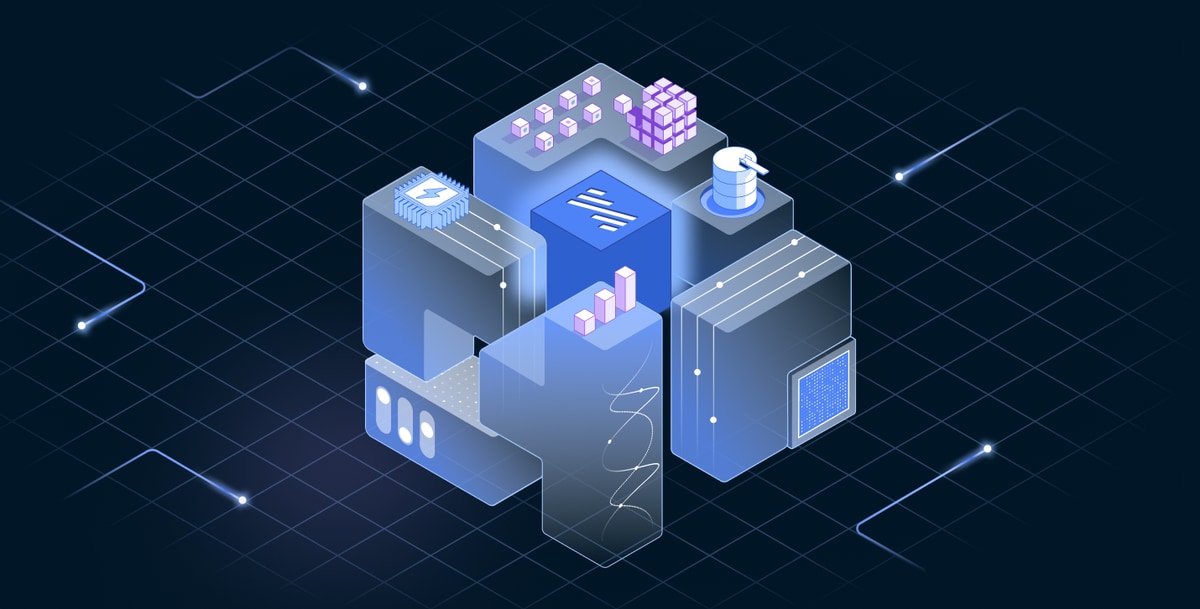

Data infrastructure is under pressure to do more than ever before. What was once built to support dashboards and periodic reporting now needs to power real-time analytics, machine learning, and increasingly, AI-driven workflows. As data volumes grow and new tools continue to emerge, the ability to access, move, and use data flexibly has become essential.
But most architectures weren’t designed for this level of scale or change.
Open Data Infrastructure (ODI) is an architectural approach that allows organizations to store data once in open formats and use it anywhere — across tools, compute engines, and AI systems — without being locked into a single vendor.
It reflects a shift away from tightly coupled, proprietary platforms toward a modular, standards-based foundation where storage, compute, transformation, and consumption can evolve independently. As data and AI workloads continue to grow, ODI gives organizations greater control over their data and costs, rather than outsourcing those decisions to a single platform.
[CTA_MODULE]
The problem with today’s data architectures
To understand why ODI is gaining traction, it helps to look at how most data architectures operate today. Many organizations rely on what we call “walled gardens” — closed, proprietary platforms that tightly couple storage, compute, and tooling into a single ecosystem. While these systems can simplify initial setup, they also limit how data can be accessed, moved, and used over time.
As organizations scale, those limitations become harder to ignore. Teams often find themselves duplicating data across systems to support different tools and use cases, driving up both storage and compute costs. At the same time, tightly coupled architectures make it difficult to adopt new technologies or evolve existing workflows without significant rework.
These challenges are only becoming more pronounced as AI adoption grows. Instead of supporting occasional human queries, data infrastructure must now handle continuous, agent-driven workloads that require flexibility, scale, and real-time access.
Without a more open foundation, complexity increases, costs rise, and the ability to innovate slows.
Why Open Data Infrastructure matters
Open Data Infrastructure is not just a technical preference — it’s a structural shift in how organizations manage and scale data.
As data usage expands across analytics, operations, and AI, the limitations of tightly coupled systems become more costly. Organizations need a way to maintain a single source of truth while supporting multiple compute engines, evolving tools, and new workloads — without constantly re-architecting their stack.
ODI addresses this by separating storage, compute, and tooling into distinct layers. Data is stored once in open formats, and compute is applied where and when it’s needed. This allows teams to scale more efficiently, adopt new technologies more easily, and maintain control as their data ecosystem grows.
The 4 benefits of Open Data Infrastructure
The impact of ODI becomes clear in how it changes day-to-day operations and long-term strategy.
1. No vendor-lock in
Because ODI is built on open standards, data and transformation logic are not tied to a single platform. Organizations retain control over how their data is stored, accessed, and used, making it easier to evolve their architecture over time.
2. Lower cost at scale
By storing data once in a central location and applying compute as needed, ODI reduces the need for duplicate pipelines. Teams can choose the most cost-effective engine for each workload, rather than being locked into a single pricing model.
3. Faster innovation
A modular, interoperable architecture makes it easier to introduce new tools and technologies. Teams can experiment, iterate, and adopt new capabilities without the overhead of large-scale migrations.
4. Built for AI and real-time workloads
As data consumption becomes more continuous and automated, ODI ensures that analytics and AI systems can access consistent, governed data without duplication or delay.
The principles and architecture behind Open Data Infrastructure
At its core, ODI is defined by a set of architectural principles that enable flexibility without sacrificing consistency.
1. Open, standards-based data movement and transformation
Data ingestion and transformation are portable across tools and engines. Pipelines are not locked into proprietary APIs or runtimes, allowing teams to evolve their workflows without disruption.
2. A unified, open data lake foundation
ODI begins with a single, universal storage layer where enterprise data is landed once in open, standards-based formats, and compute engines, tools, and workloads evolve on top of a pluggable foundation. By centralizing on an open lake foundation, storage is separated from compute, data duplication is minimized, vendor-controlled access paths are avoided, and cost control is preserved.
3. Activation, semantics, and AI consumption
ODI extends beyond storage to ensure business entities, metrics, and definitions are defined once and reused everywhere. Dashboards, workflows, and AI models operate on the same trusted logic, semantics and metadata remain centralized, and governance policies are applied consistently. This means AI agents and analytics tools act on unified context, not fragmented definitions.
Open Data Infrastructure vs. all-in-one platforms
All-in-one platforms can offer simplicity at the outset, but that simplicity often comes with trade-offs over time. These platforms typically bundle storage, compute, and tooling into a single ecosystem, which can limit flexibility and increase switching costs as requirements evolve. What begins as convenience can gradually become constraint, especially as organizations scale their data usage.
Open Data Infrastructure takes a different approach. By keeping data in open formats and separating it from compute and tooling, ODI allows organizations to standardize where it makes sense while preserving the ability to change and evolve.
The result is an architecture that supports long-term adaptability, rather than locking it in.
ODI prioritizes long-term control and adaptability over short-term convenience.
Use cases for Open Data Infrastructure
ODI becomes especially valuable in environments where flexibility, scale, and coordination across systems are critical.
1. Large-scale AI and machine learning
Training models, running inference, and supporting autonomous agents require multiple compute types: warehouses for analytics, lakehouse engines for large-scale processing, vector databases for retrieval, and ML runtimes for training and inference. ODI enables all of them to operate against the same open foundation, without copying data between systems.
2. Cross-organizational data sharing
When data is stored in open formats and governed through shared standards, it becomes easier to share data across business units, collaborate with partners, and support ecosystem integrations without exposing yourself to proprietary lock-in.
3. Real-time operational intelligence
Agent-driven workflows require fresher data and coordinated access across systems. ODI ensures operational automation, analytics, and AI models operate on consistent, governed data, not siloed copies.
Best practices for implementing Open Data Infrastructure
Adopting ODI requires intentional design, but organizations don’t need to transform everything at once. Here are some best practices to consider:
- Start with a pilot project to validate your approach. Choose a high-impact workload (e.g., AI experimentation or cross-engine analytics) and validate your open architecture approach before broad rollout.
- Adopt open table formats early to avoid lock-in. Standardize on open formats (e.g., Apache IcebergTM or Delta Lake) to prevent early lock-in and preserve portability across engines.
- Separate storage and compute from day 1. Land data once in object storage and route workloads to the appropriate engine.
- Invest in data quality and freshness. Agent-scale systems amplify inconsistencies. Invest in automated validation, monitoring, and schema evolution.
- Centralize governance and semantic definitions. Define business entities, metrics, and semantic models centrally so analytics and AI operate on the same logic.
- Design for modularity and future flexibility. Avoid tightly coupling ingestion, transformation, and compute decisions that will be expensive to reverse later.
Organizations like Tinuiti have taken this approach by centralizing data into open formats to support advanced analytics and AI-driven insights, enabling faster decision-making without increasing infrastructure complexity.
[CTA_MODULE]
Enabling Open Data Infrastructure with Fivetran
In an ODI architecture, ingestion is a foundational layer. If access to core business data is incomplete or unreliable, downstream systems — whether analytics or AI — cannot operate effectively.
Platforms like Fivetran help enable ODI by providing:
- Automated, reliable data ingestion across hundreds of sources
- Support for open table formats like Iceberg and Delta Lake
- Separation of storage and compute through managed data lake services
- Built-in schema evolution, monitoring, and reliability
By separating storage from compute and reducing the operational burden of data movement, Fivetran helps organizations build flexible, scalable architectures aligned with ODI principles — so teams can focus on deriving value from data rather than managing infrastructure.
Open Data Infrastructure FAQs
What tools are used for data collection and ingestion in an open data stack?
Organizations use managed ELT platforms, CDC tools, and event streaming systems like Fivetran. The key requirement is that ingestion is decoupled from compute and supports open standards.
Which databases are used for data storage in an open data stack?
In Open Data Infrastructure, storage lives in an open data lake. Enterprise data is centralized in object storage such as S3, ADLS, or GCS and written in open table formats like Iceberg or Delta Lake. This separation of storage from compute is foundational to ODI. Instead of locking data inside a proprietary warehouse or tightly integrated platform, the lake becomes the universal source of truth.
How does open data infrastructure support AI and autonomous agents?
ODI enables AI systems to access consistent, high-quality data without duplication. Shared semantics ensure that analytics and AI operate on the same definitions.
Isn’t consolidating into a single all-in-one platform simpler?
All-in-one platforms may simplify initial setup, but they limit flexibility and increase long-term costs. ODI provides a more adaptable foundation while still allowing consolidation where appropriate.
Apache Iceberg is a trademark of the Apache Software Foundation.
[CTA_MODULE]
Related blog posts
Start for free
Join the thousands of companies using Fivetran to centralize and transform their data.