Disposable software

Disposable software is:
- Used by a single organization or a single person.
- Built for a highly specific purpose.
- Used for a limited period of time and then thrown away.
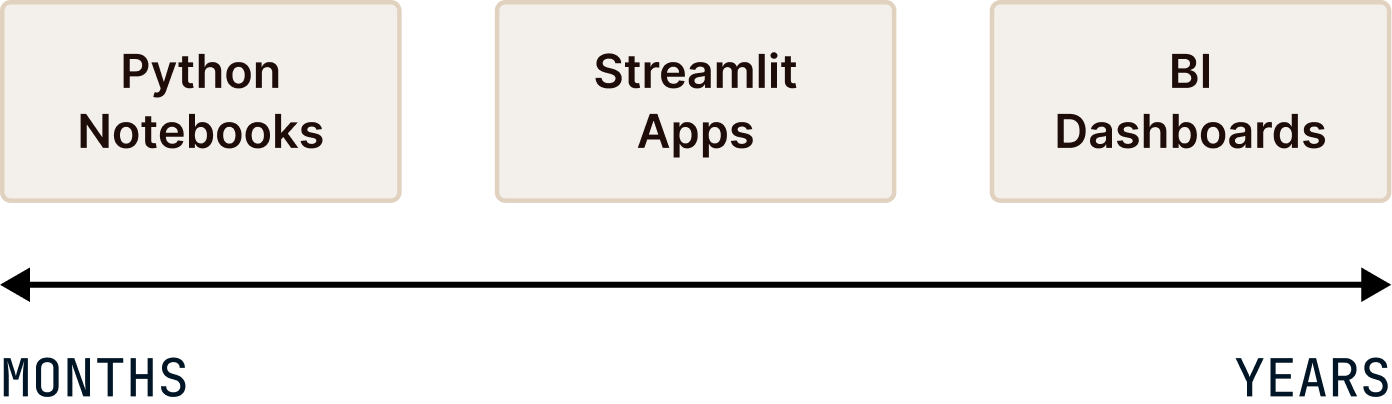
Good examples of disposable software are Python notebooks, Streamlit apps, and business intelligence (BI) dashboards. They exist on a spectrum which roughly corresponds to how long they typically live:
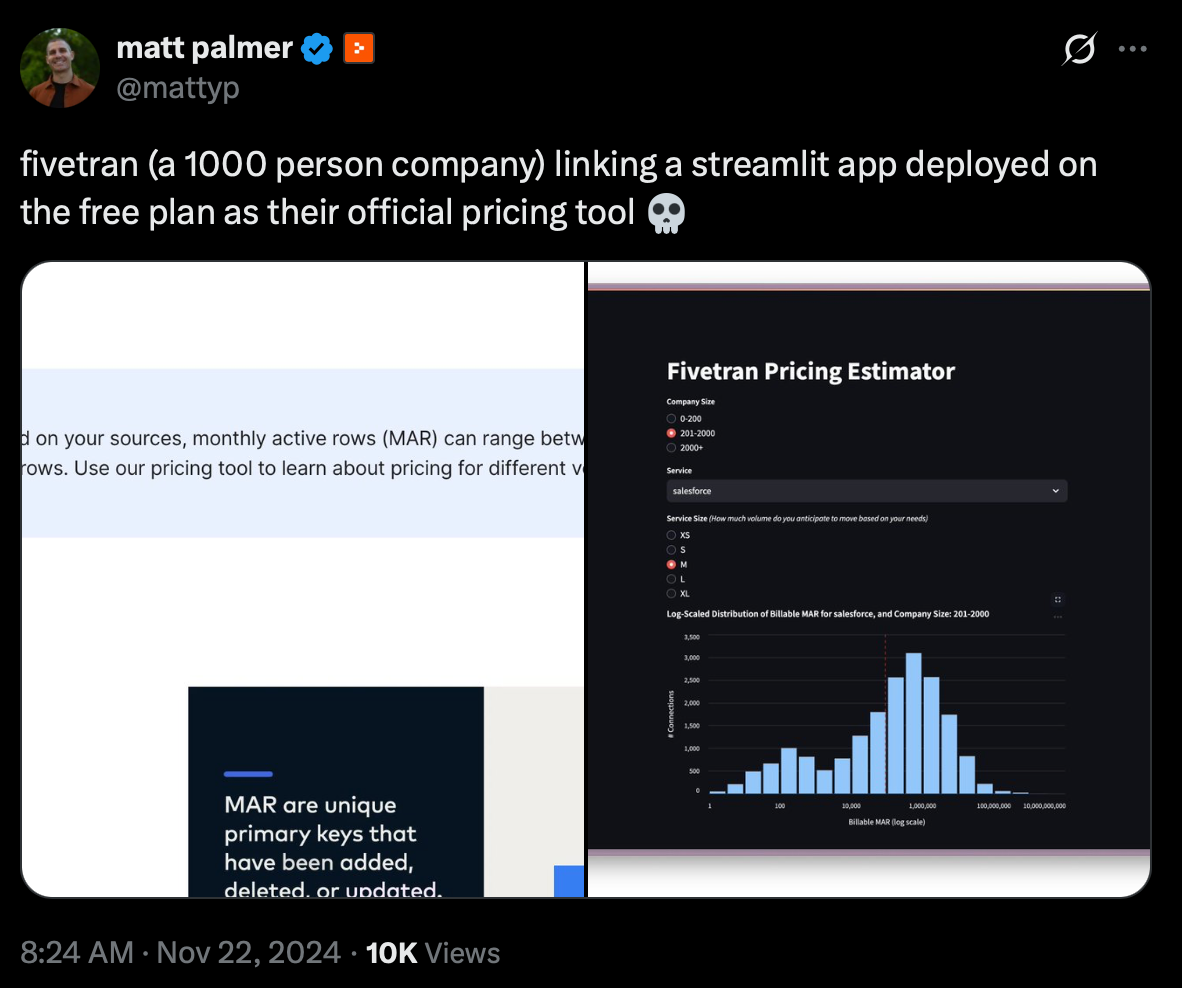
At Fivetran we built a prototype of a new pricing estimator as a Streamlit app. We iterated fast and came up with something that we liked so much better than the old estimator that we went ahead and shipped it as the official pricing tool while the frontend team worked on rewriting it as a React app. A lot of the code for it was written by Claude.
AI is going to make disposable software a lot more common. For a preview of what this is going to be like, we know where to look: Star Trek: The Next Generation.
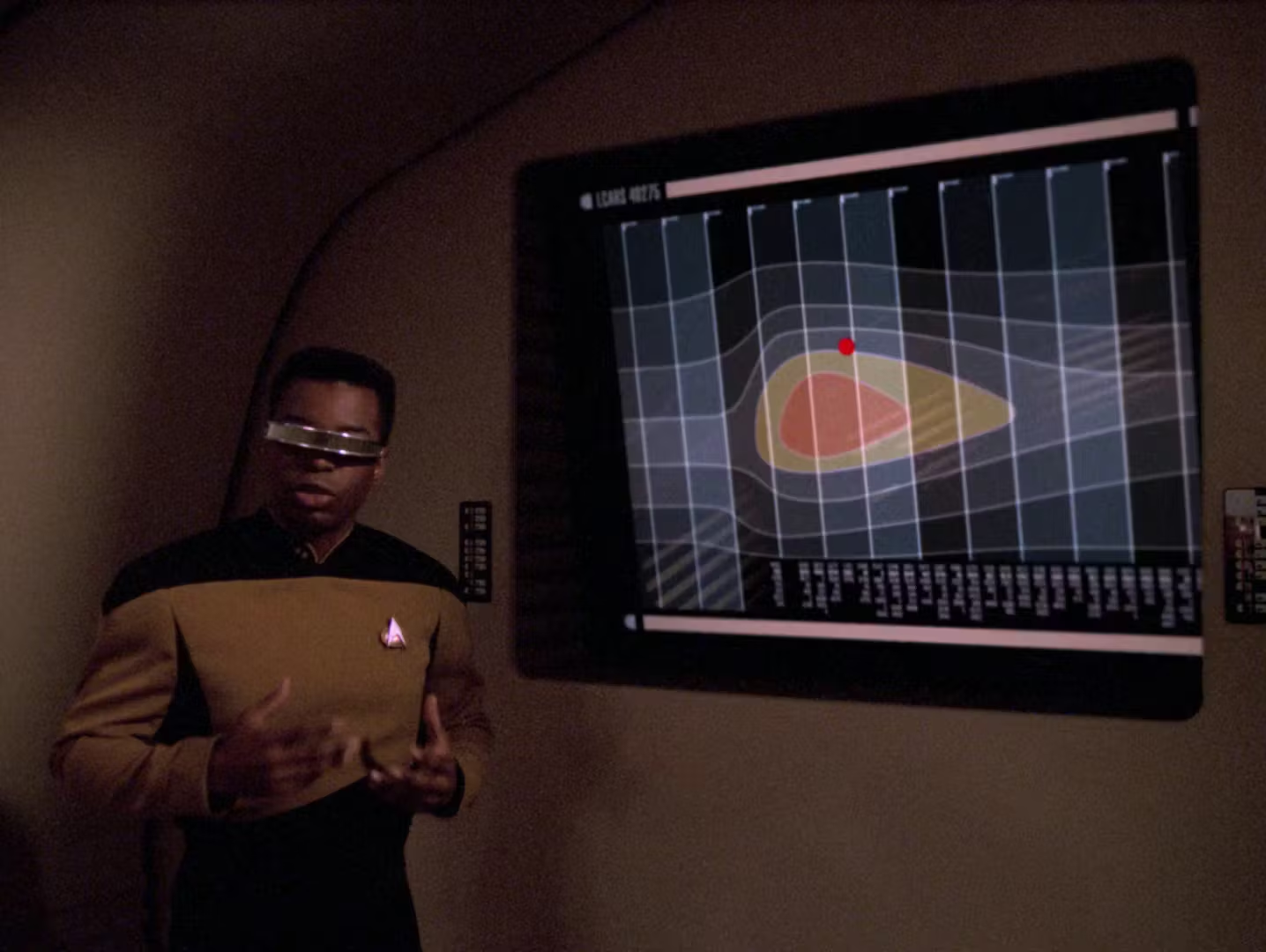
In TNG, the computer would often synthesize user interfaces on demand to help the team solve a unique problem. Sometimes these were basically BI dashboards that would get presented in meetings, like the one above.
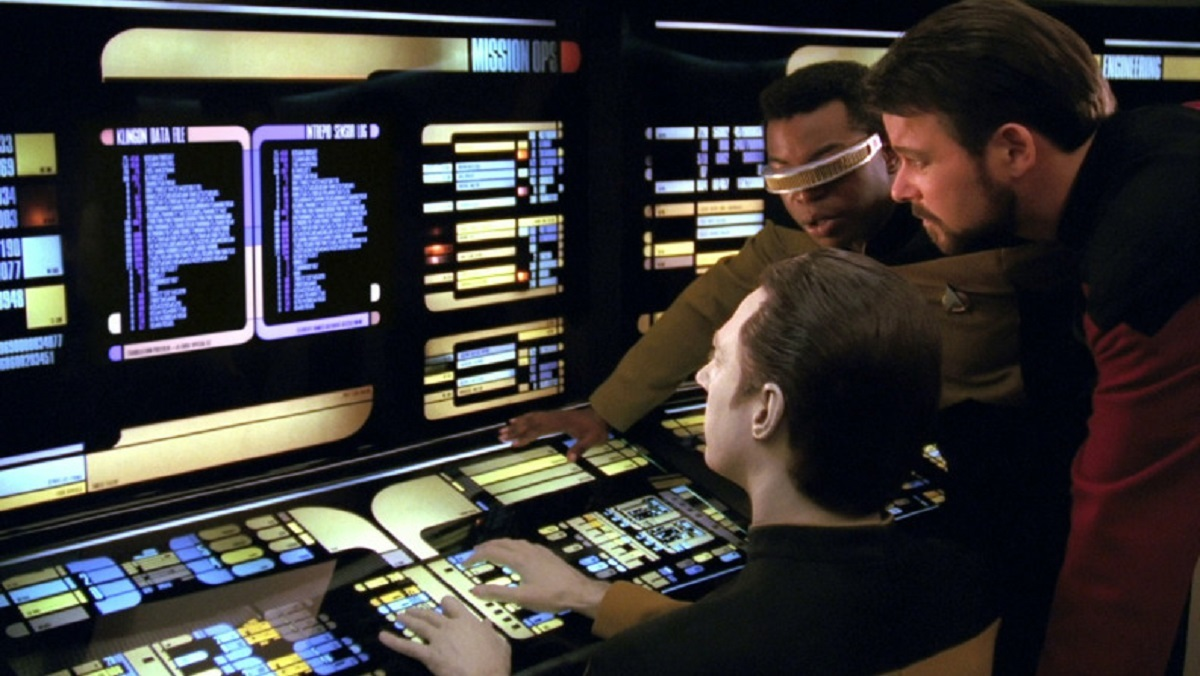
Sometimes they incorporated simple user inputs that people could interact with to work with a task-specific dataset, very much like a Streamlit app.
Most of the software on the Enterprise D was fixed, like navigation and weapons controls. Even when you have a computer that can generate any user interface you want on-demand, it still makes sense to have standardized software for standard problems. If you invest the time to make a really well-thought-out workflow, it will be better than what people invent in the moment. Complex workflows also take time to learn, and we don't want to learn a new user interface every day. So traditional packaged software is not going to go away.
But some things are going to change a lot. Arguably the entire category of BI is disposable software. The average lifespan of a BI dashboard is maybe 6 months. At a mid-sized company there are perhaps 10 canonical dashboards that need to be the same every time, but everything else is a one-off or gets stale very quickly with the speed of the business.
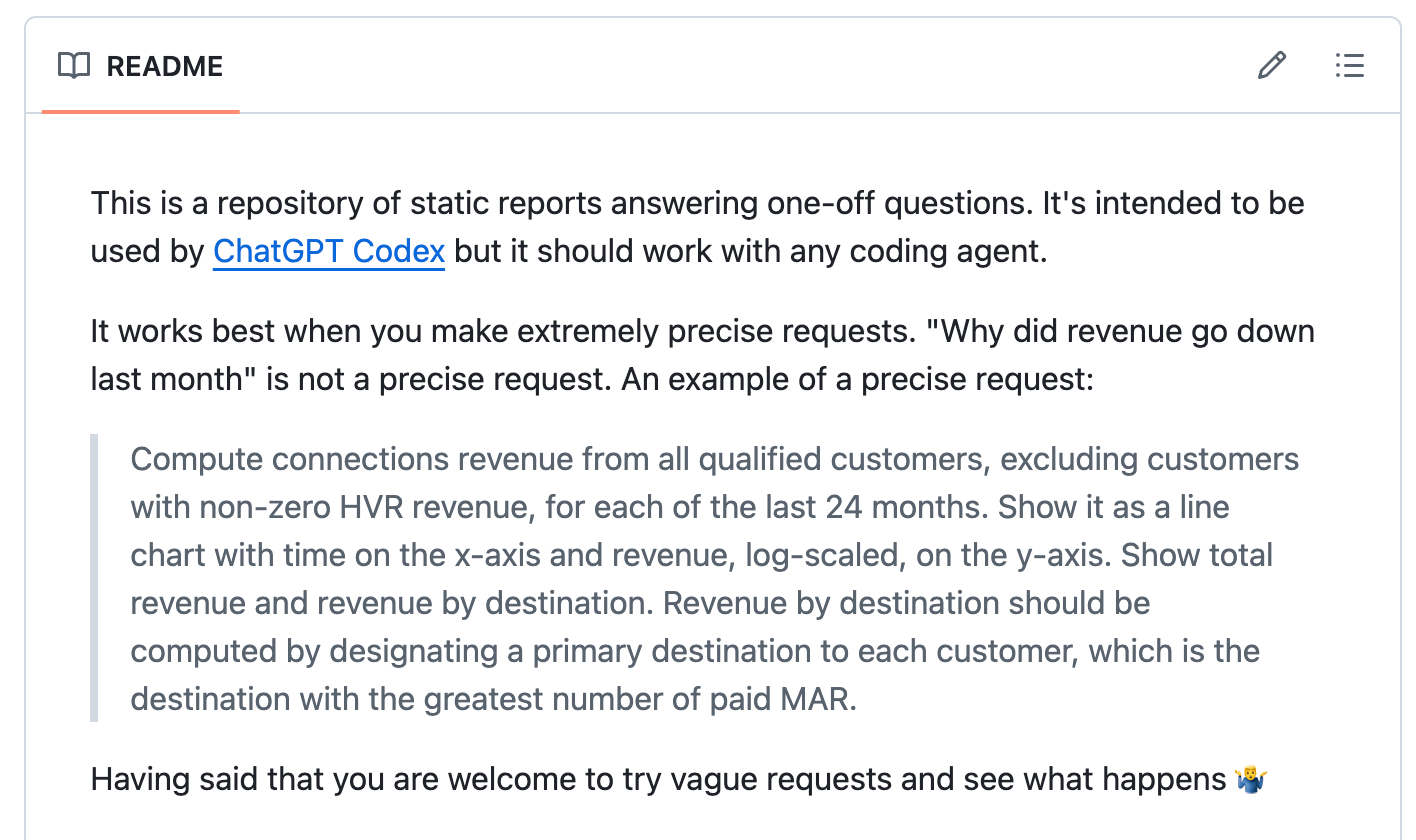
I personally make heavy use of an on-demand-reports agent that I’ve hacked together with Codex. It’s basically a bunch of markdown files that describe what’s in our core dbt model and some utilities for interrogating the data warehouse. Every report is a Python script that runs a SQL query and generates a markdown file. During Fivetran’s most recent board meeting, I updated 2 reports and generated a new one based on what we were discussing. Before I had this workflow I didn’t have analysts standing by to produce up-to-the-minute reports for the board discussion. In retrospect, I probably should have!
As this kind of workflow gets widely adopted most of the traditional Bl output will move to on-demand but shareable insights, with the analytics team only creating a few gold standard core dashboards. Everything else comes from analytics creating the context to provide accurate on-demand insights. Meaning the role of analytics moves even closer to librarians or curators of context and away from dashboard farms. The data model, and dbt specifically, is going to become even more important.
Disposable software becoming more important is going to be a great thing. We have an intuition that disposable things are bad, because in the real world, disposable goods create a lot of waste. In the world of software, this does not apply: bits don't go to a landfill, they just disappear. AI is going to drive the cost of creating software to zero, in time and dollars, and this is going to radically change the calculus of creating long-lived re-usable software that serves multiple purposes versus short-lived disposable software that serves a single purpose.
[CTA_MODULE]
Articles associés
Start for free
Join the thousands of companies using Fivetran to centralize and transform their data.


